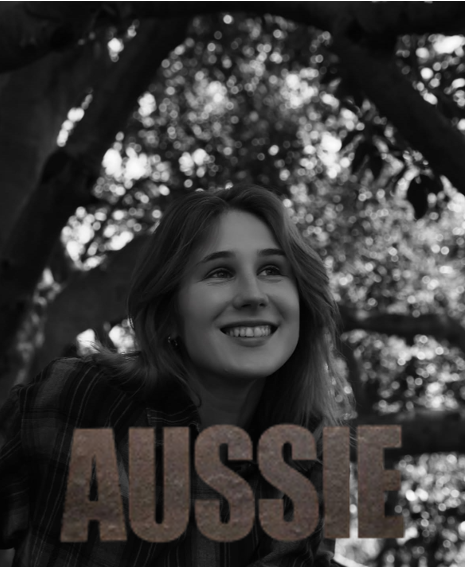
What is it to be Australian? What do we mean when we call someone an Aussie? The answer to this inherently definitional, yet exceptionally vague question, is not something one can easily derive.
For 96.2% of the population, it isn’t something that can be traced back through centuries of linage, of connection to the flora and fauna of this beautiful piece of red earth. Nor can it be pinned down to a shared tradition, a foundational cuisine, religion or social code.
Rather, it is something necessarily conceived, understood, as a shared tether between each of us to the beating heart of this country. As a bond, distinct and recognizable, to ‘being an Aussie, mate’.
It is defined by all of us; the ever-growing, ever-evolving, ever-changing citizenry of this wonderful nation.
It exists in how we go about our day, in its unique style, as Australians. It is something present as we interact at the workplace, the coffee shop, on the sidewalk, and around the table. It occupies a part of our personalities, our perspectives, our values. It ties us to a familiar, shared core.
But it is not an explicit trait, nor an unwritten code. Something immovable and abstract that one may study and learn to pledge allegiance to.
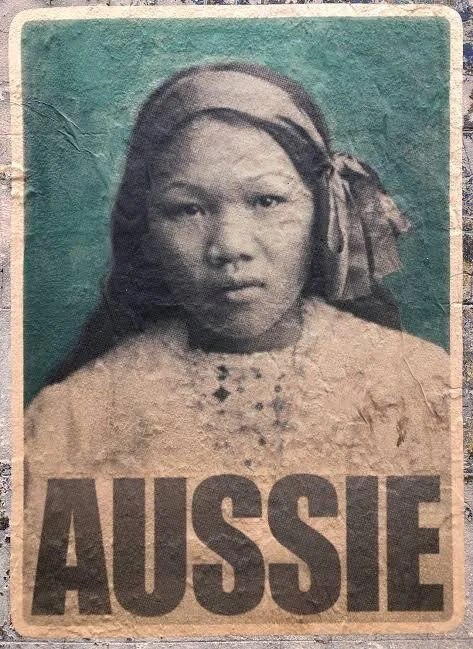
‘Aussieness’ is fluid; an identification with this young, inexperienced, impressionable and exceptionally multicultural country. It is something that redefines itself with every new person that comes to belong to this brilliant society, characterized by the melting pot of stories, ideas and journeys of those who settle upon this grand island.
However, for many of our neighbours, attempting to isolate the answer to this pervasive question is a daily struggle.
They feel obligated to ask themselves: ‘Do I speak the way I’m expected to speak, or walk the way I’m expected to walk?’ ‘Do I smile too much, or not enough? ‘Do I order the right coffee, or make the right amount of small talk in line?’ ‘Is my accent too harsh, my beliefs too strong, my demeanour too foreign, my interests too alien?’
‘If someone asked me what an Aussie is, would I produce the right answer?’ ‘Could I declare myself as the right type of jigsaw piece for this vast puzzle?’ ‘Do I fit in?’ ‘Do I know how to be an Aussie’
These kinds of unrelenting, hounding questions are something migrants like Nina are no stranger to.
Seeking an escape from the patriarchal, restrictive life she saw rolled out before her on the Russian island of Sakhalin, Nina found herself hastily enrolled in a construction diploma up in Queensland at just seventeen years of age.
With this abrupt change for such a young girl, forced to rapidly adapt to a radically different environment whilst only possessing a basic comprehension of the language, attempting to integrate was an incredibly bumpy ride.
However, these intimidating circumstances did little to shake Nina’s conviction, as she soon found herself enrolled in an international business course and braced herself to plunge headfirst into Australia’s cultural capital.
Only a few months later, and she received her first proper introduction to the realities of an Aussie lifestyle in a tender way.
“I moved in with a guy.”
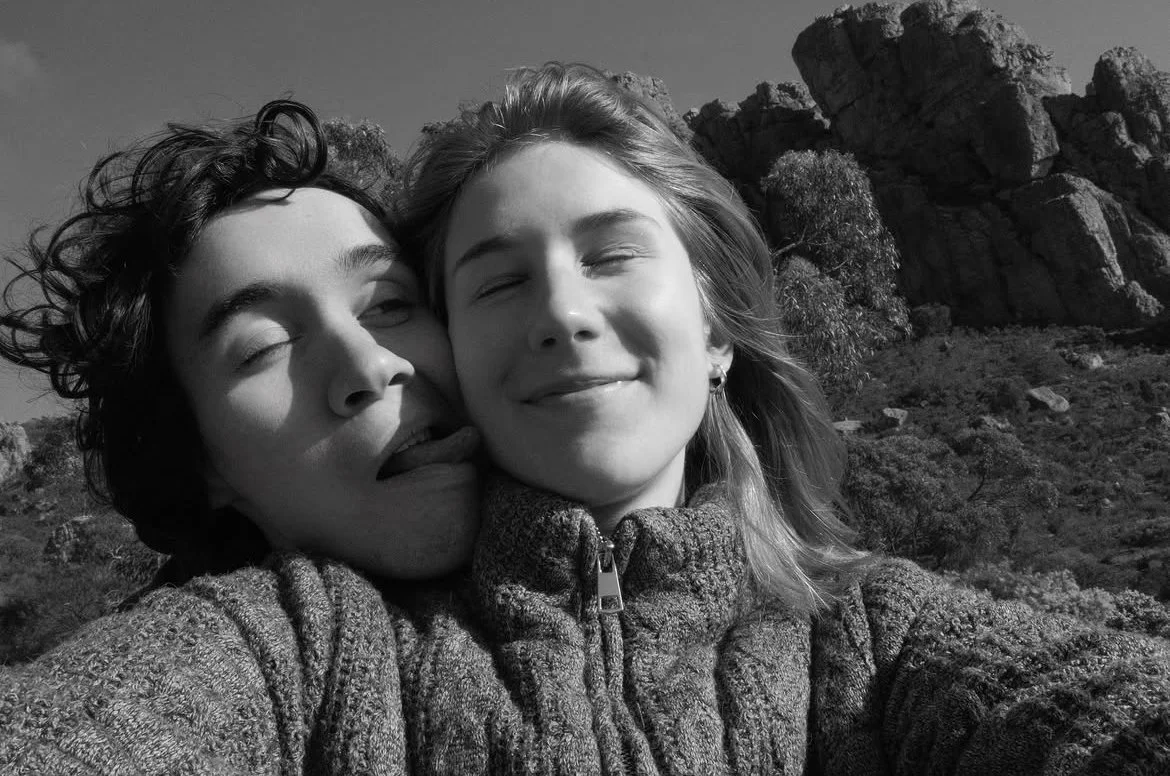
“If not for Julian, I would have stayed in that bubble. I never saw myself dating anyone not Russian because I saw the language as a big barrier and communication is so important”.
In opening herself to the intimacies of falling in love with a true-blue Aussie, Nina was quickly submerged in a completely different style of life.
Her now-fiancé Julian, whose childhood spent across the Central Coast, Blue Mountains and Northern Tassie curated an intense admiration for pretty much everything Australian, Nina found herself quickly building a fascination for the culture which surrounded her.
“Julian was asking me a few times: ‘Do you know this TV show?’ So I definitely made effort to do that. I made effort to learn more about politics. That was the first one, I think. It was a big part of my life then. And I actually put effort and, like, would learn something new every day and read about it. I did want to understand you more and be closer to you”.
“But I think it was both to be close to Julian and to be a part of Australian society because I moved here, I wanted to be a part of it”.
Propelled by the positivity of her accelerating interest in all things Australia, Nina begun to contribute pieces of her own identity to the country. Most notably by offering her artistic talents for the Labour Unity Club’s social media, which Julian headed up.
“I love doing photo shoots, creative photoshoots, or like drawing, writing poetry or something, just some jotting. Even if it’s, like, completely unrelated, some made-up story, it’s still a reflection of what you see when you live”.
Before long, Nina’s keen creative eye was brought to the attention of a Victorian Member of Parliament, and just like that she was employed to run their social media.
This plunge into both Australian society and the instruments shaping it, didn’t just signal the start of a fresh chapter, but something much more emancipatory for Nina as a Russian emigrant.
“I explained to myself that it’s very important to translate what’s happening in politics to an average person. I didn’t have political or social freedoms in Russia”.
“I was a very opinionated girl. I always had an opinion of things. I was just sitting there, very frustrated. I would openly talk to all the kids, this is absolute bullshit! What are they brainwashing us? This is terrible!”
“Early at school, I had the opportunity to travel, unlike many other kids, and I could see the world and things and compare. I explained to myself, it was like…freedom. I had the freedom to travel, to see things, so I wanted freedom to decide what I want. I want freedom to experience my own life. Even if I fail, it will be my own failure. I could be upset with myself rather than these people will decide for me what I do, where I go”.
“People don’t believe in social communism in Russia, they do own things and they do own business. And I suppose the only way of changing life there and bringing change is business because you can’t do it through government”.
“So I came here a very business-focused person because I thought ‘I want to bring change the world, so I’ll do business’. And while living here the past three, four years, my life was completely involved in politics. And now I want to be more involved in policymaking because I understood ‘Oh, you can actually bring about change through it’. ‘It’s actually democracy and it’s working’”.
“That’s, oh my God, the big part of life that just got uncovered. I value that, I appreciate that”.
Today, Nina balances two jobs, a degree and volunteering commitments, all the while maintaining strong social connections. Exceptionally proud of the role she has carved for herself in Australia, and deeply grateful of the fact that her voice has been respected rather than shunted here, Nina continues to strengthen the tether that unites her to ‘Aussieness’.
“I consciously thought, ‘Okay, I don’t want to do this, I want to do that’. When coming back from Russia this year, I understand that I definitely don’t fit in there. So I’d rather stay here and keep trying, keep trying to fit in. I was discovering, uncovering one by one and thinking, ‘Oh, it actually fits me’. Being myself here, yeah. I fit in more than being myself in Russia”.
However, despite her proud expression of embracing being an ‘Aussie’, something most of us born here simply take for granted, Nina is still subject to the harshness of the immigrant experience.
She still is unable to avoid the intense, almost forensic, scrutiny that bureaucratic processes and nationalistic stigmas impose upon her to validate her relationship with this country.
“[The visa process] That broke me down completely and paralysed me in many ways, especially the process of asking so many people about, you know, writing a letter. And most of them we had to nudge all the time. Yeah, it’s a bit, I don’t know, ‘humiliating’ is a strong word, but you’re kind of begging”.
“And if before that I felt like I’m equal to everyone, more or less, it reminds me another way, another time, that you, you’re not equal and there’s a big gap between you and your friends.”
“I support financially my mum. I have to make sure that I migrate here and I want to bring my mum here. I don’t have a stable future. I don’t know what’s going to happen in like six months. I’m going to be kicked out of here and ‘Okay, I have to simultaneously build a new plan because I don’t want to come back to Russia’. It’s a little bit different questions than the average 21-year-old asks here”.
“I’m at the stage where I’m trying to become Australian and become part of Australia and build by Australian friends and social capital. I don’t want to talk about Russia all the time. I’d rather not mention it”.
But, as mandated by the regulatory mechanisms of Australia, talking about Russia is exactly what Nina is forced to do every single day.
To compare and contrast her heritage, upbringing, and past with what the current advantageous policy decides, arbitrarily, to deem as an acceptable level of ‘Aussieness’. To be constantly placed under the microscope and interrogated by the double standards which linger in everything she does and everywhere she goes. To demonstrate that she, a passionate, bold, liberated, expressive, loving and kind young woman should be permitted to embrace the freedoms, values and connections she has fostered in this country.
Like every single Australian, Nina’s life is rife with the friends, family, history, interests, beliefs, perspectives, experiences and aspirations she has here.
Yet, unlike everyone gifted the simple plain luck to be born here, Nina is obligated to prove it.
To prove that she is an Aussie. To prove that she belongs. To prove that she is the right shape of jigsaw piece for this ever-growing, ever-evolving, ever-changing puzzle that is Australia.
As far as I can tell, Nina has a stronger tether to the heart of this country than most Aussies I know.
Her beautiful character more than aptly represents the wonderful values of this nation, embodies its unique personality, and adores it in an exceptionally heartfelt, exceptionally Aussie way.
Nina definitely is an Aussie. It’s about time we recognized it.